The research and development of 6G communication technology is unfolding globally, with commercialization expected around 2030. As the next generation of communication technology, 6G will bring even higher speed, smarter, and more extensive connectivity capabilities, while also putting forward new challenges and requirements for telecom power technology. This article analyzes the new requirements for telecom power technology in the 6G era and explores the development trends of related technologies.
I. Technical Characteristics of 6G Communication and Power Requirements
6G communication technology will have the following main characteristics, which directly affect the development direction of power technology:
- Ultra-High Speed: The peak rate of 6G networks is expected to reach 100Gbps or higher, far exceeding 5G's 10Gbps.
- Ultra-Low Latency: End-to-end latency will be reduced to sub-millisecond levels, supporting real-time interaction and immersive experiences.
- Ultra-High Density: Supporting more than 10 million connections per square kilometer, realizing the Internet of Everything.
- Ultra-Wide Coverage: Achieving global seamless coverage through satellite communication and other technologies.
- Intelligence: Introducing artificial intelligence technology to realize network self-perception, self-decision, and self-optimization.
These characteristics put forward the following new requirements for telecom power technology:
- Higher Power Density: Meeting the power supply needs of high-density equipment.
- Higher Energy Efficiency: Addressing the energy consumption challenges brought by large-scale deployment.
- Smarter Management: Supporting dynamic adjustment and optimization of the network.
- More Flexible Deployment: Adapting to diverse application scenarios.
- Higher Reliability: Ensuring continuous operation of critical services.
II. Development Trends of Power Technology in the 6G Era
1. High-Efficiency Power Conversion Technology
To meet the high energy consumption requirements of 6G networks, power conversion efficiency will become a key indicator:
- Wide Bandgap Semiconductor Technology: Applying GaN, SiC and other wide bandgap semiconductor materials to improve power conversion efficiency and power density.
- Advanced Topology Structure: Adopting more advanced power topology structures to reduce energy loss.
- Digital Control Technology: Utilizing digital signal processing technology to realize more precise power control and higher conversion efficiency.
2. Intelligent Power Management System
The dynamics and complexity of 6G networks require power systems to have more advanced intelligent management capabilities:
- AI-Driven Power Management: Using artificial intelligence technology to realize autonomous decision-making and optimization of power systems.
- Edge Intelligence: Sinking intelligent decision-making capabilities to edge nodes to reduce latency and improve response speed.
- Predictive Maintenance: Through machine learning algorithms, predicting power equipment failures and realizing preventive maintenance.
3. Sustainable Energy Solutions
Against the background of global carbon neutrality, 6G networks must adopt more sustainable energy solutions:
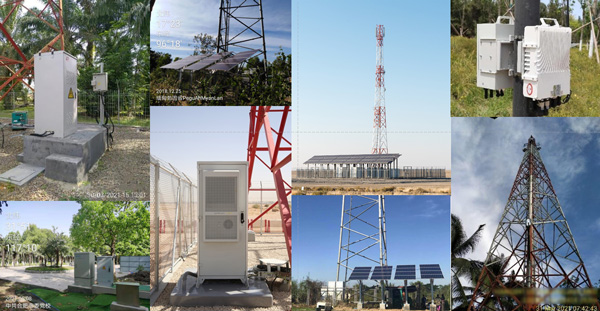
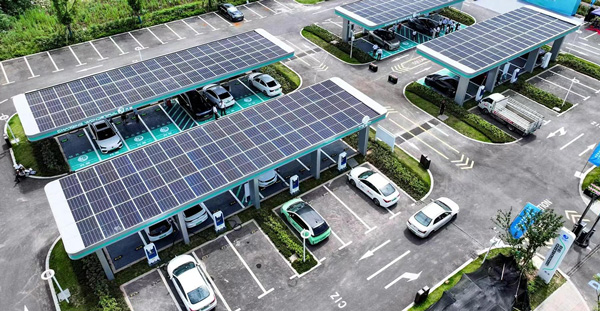
- Renewable Energy Integration: More deeply integrating renewable energy such as solar and wind power to reduce dependence on traditional energy.
- Energy Harvesting Technology: Utilizing environmental energy, such as radio frequency energy and thermal energy, to power low-power devices.
- Green Battery Technology: Developing more environmentally friendly and efficient battery technologies, such as solid-state batteries and organic batteries.
4. Flexible Reconfigurable Power Architecture
The diverse application scenarios of 6G networks require power systems to have higher flexibility and reconfigurability:
- Software-Defined Power: Defining the output characteristics of power through software to adapt to the power supply needs of different devices.
- Modular Design: Adopting highly modular design to support rapid deployment and flexible expansion.
- Heterogeneous Integration: Integrating power systems with other functional modules to reduce volume and weight.
5. Digital Twin Technology
Digital twin technology will play an important role in 6G power systems:
- Virtual Modeling: Creating digital twin models for physical power systems to realize real-time monitoring and simulation.
- Optimized Design: Optimizing the design and operating parameters of power systems through digital twin models.
- Fault Diagnosis: Using digital twin technology to quickly locate and diagnose power system failures.
III. Beijing High-tech Dynamic's 6G Power Technology Layout
As a leading enterprise in the field of telecom power, Beijing High-tech Dynamic Power Co.,Ltd. has already started laying out 6G-era power technology R&D:
- Establishing a dedicated R&D team: Forming a 6G power technology R&D team focused on the research of next-generation telecom power technology.
- Carrying out industry-university-research cooperation: Establishing cooperative relationships with universities and research institutions to jointly promote innovation in 6G power technology.
- Investing in frontier technologies: Increasing R&D investment in wide bandgap semiconductors, AI power management and other frontier technologies.
- Building test platforms: Establishing 6G power technology test platforms to support technology R&D.
IV. Challenges and Opportunities
The development of 6G power technology faces many challenges:
- Technical Challenges: Need to break through existing technical bottlenecks and develop new power technologies.
- Cost Challenges: New technology R&D and application require a lot of capital investment.
- Standard Challenges: Need to participate in the formulation of international standards for 6G power systems.
- Integration Challenges: Need to deeply integrate with 6G communication systems to achieve collaborative optimization.
At the same time, 6G power technology also brings huge opportunities:
- Market Opportunities: The global deployment of 6G networks will create a huge power equipment market.
- Technical Opportunities: Promote innovation and breakthroughs in power technology, enhancing the core competitiveness of enterprises.
- Cooperation Opportunities: Promote cooperation between upstream and downstream of the industrial chain and build an ecosystem.
- Social Opportunities: Contribute to the realization of digital economy and sustainable development.
V. Conclusion and Outlook
The arrival of the 6G communication era will completely change our way of life and work, and telecom power technology, as an important part of the infrastructure, will play a key role. Beijing High-tech Dynamic Power Co.,Ltd. will continue to increase R&D investment, promote innovation and breakthroughs in 6G power technology, and provide strong support for building more efficient, smarter, and more sustainable 6G networks.
Looking forward, 6G power technology will evolve towards higher energy efficiency, smarter management, more flexible deployment, and more sustainable development, making important contributions to the digital transformation and sustainable development of human society.